
The project itself :
Project Overview
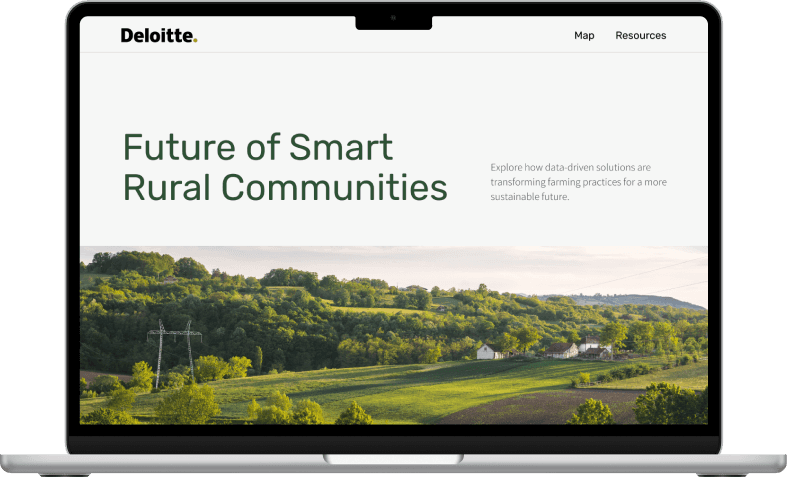
Future of Smart Rural Communities
Designing a digital platform that helps rural farming communities discover government incentives and smart-ag technologies through an interactive, map-driven website.
The Ask:
Design a strategy and website with an interactive map that makes it easy for rural farmers and community stakeholders to find relevant government programs, funding, and emerging technologies, so they can modernize agriculture, strengthen resilience, and unlock new economic opportunities.
The Solution:
We created a web platform that doesn’t just list technologies, but addresses the systemic barriers we uncovered; cost, complexity, and limited awareness. The site combines explainers, program overviews, and a clickable map so users can see which incentives, pilots, and smart-ag initiatives are available in their region, turning a complicated policy landscape into something farmers can actually act on.
Note:
Some details are intentionally high-level due to NDA with Deloitte.
Responsibilities:
Shaped site information architecture and key flows
Co-defined interaction patterns for the interactive map
Translated research findings into page structure and content strategy
Collaborated with the team on visual direction and stakeholder storytelling
All about the user :
Strategy
Smart agriculture touches many stakeholders, but our research showed that three groups would ultimately make or break adoption: farmers, government agencies, and rural communities. We focused the experience around their needs and influence.
Expand to see details
Framer is a design tool that allows you to design websites on a freeform canvas, and then publish them as websites with a single click.
Digging into the context :
Discovery
Through stakeholder conversations and secondary research, we realized the challenge went far beyond “getting farmers to use new tech”, it was about untangling the economic, educational, and infrastructural barriers that keep smart-ag tools and government incentives out of reach for rural communities.
Challenges we uncovered
In early research and stakeholder discussions, we realized the problem went far beyond “getting farmers to use new tech.” Adoption is constrained by deeper economic, educational, and infrastructural barriers that show up differently across regions.
Expand to see details
Framer is a design tool that allows you to design websites on a freeform canvas, and then publish them as websites with a single click.
Root causes we had to design for
As we mapped the ecosystem, three underlying blockers kept surfacing—high upfront costs, complexity of new tools, and ongoing labour shortages. These became the root causes our experience needed to address, not just the symptoms on the surface.
Expand to see details
Framer is a design tool that allows you to design websites on a freeform canvas, and then publish them as websites with a single click.
Bringing it to life :
Delivery
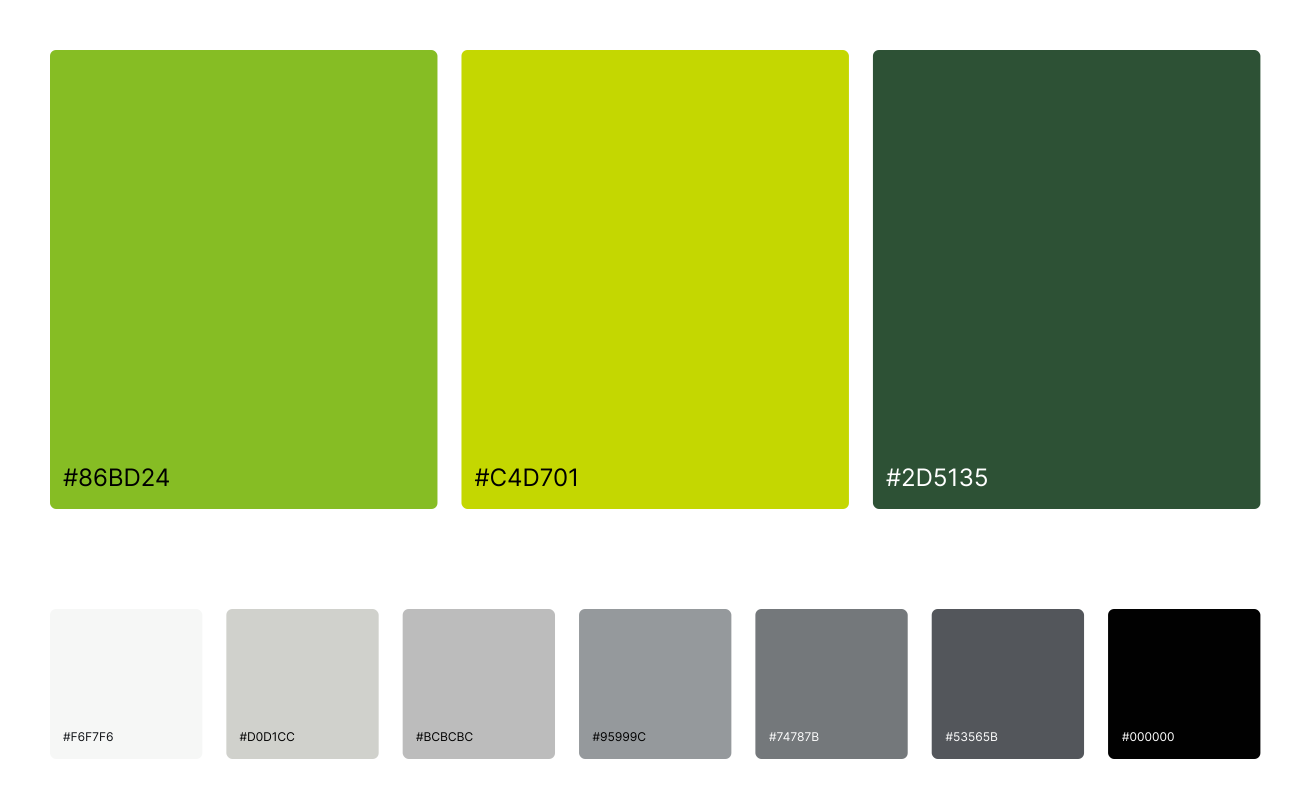
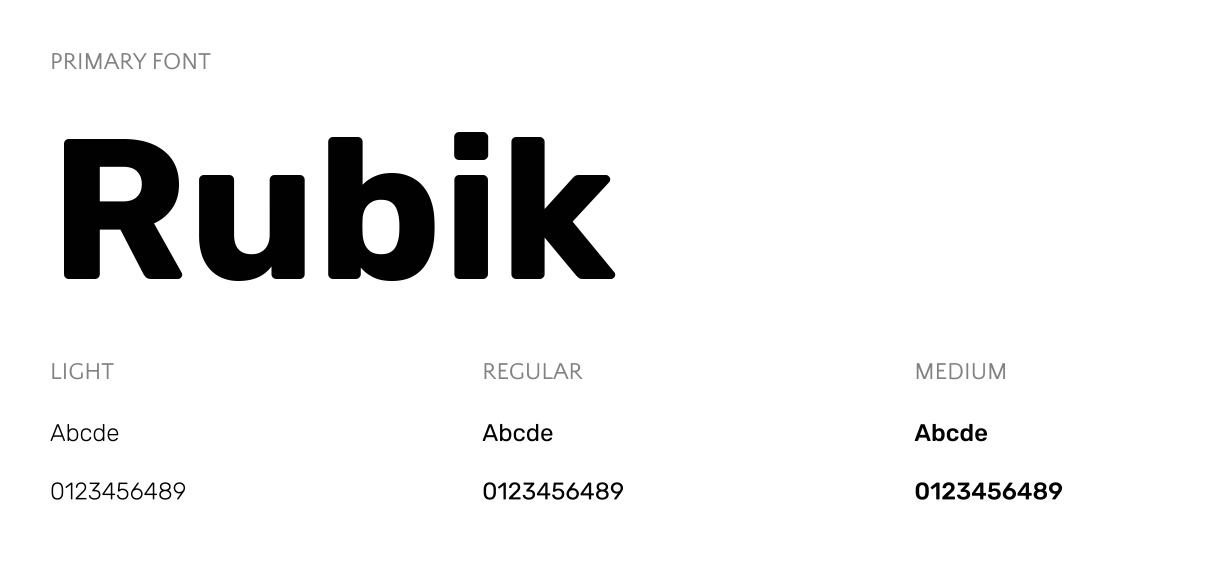
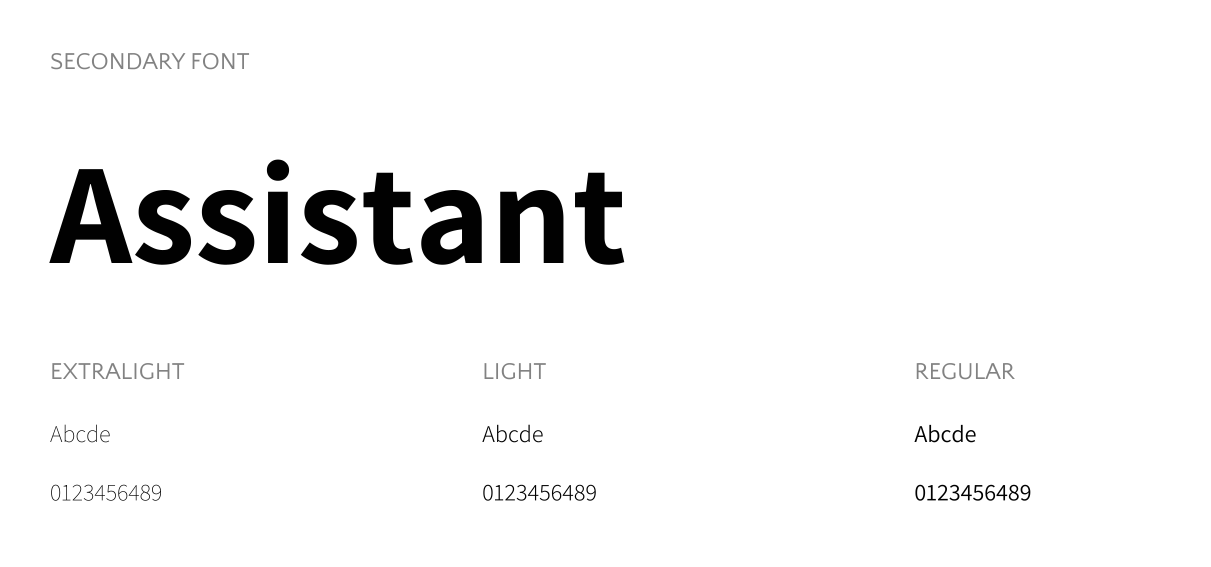
To keep the experience consistent with Deloitte’s existing digital presence, we built the interface on top of Deloitte’s official typography and color system, using their primary and secondary type styles, core green brand color, and neutral grays as the foundation. My role was to adapt these assets into a clear UI hierarchy and state system so the site felt both on-brand and approachable for rural communities.
Type & color system
As UX designer, I collaborated on a visual system that feels government-credible yet accessible to rural users: Rubik for primary UI type, Assistant as a light secondary, and a palette balancing earthy tones with clear accent colors for key actions and data states.
Interactive map
At the heart of the experience is an interactive map that surfaces programs, pilots, and technology initiatives by region. Farmers and local leaders can zoom into their area to see infrastructure, connectivity, smart-tech deployments, and available incentives, turning scattered policy documents into a visual landscape of opportunities.
From a UX perspective, my focus was to keep the map controls predictable and the overlays digestible—prioritizing filters and legends that match how farmers and planners actually talk about land, crops, and funding.
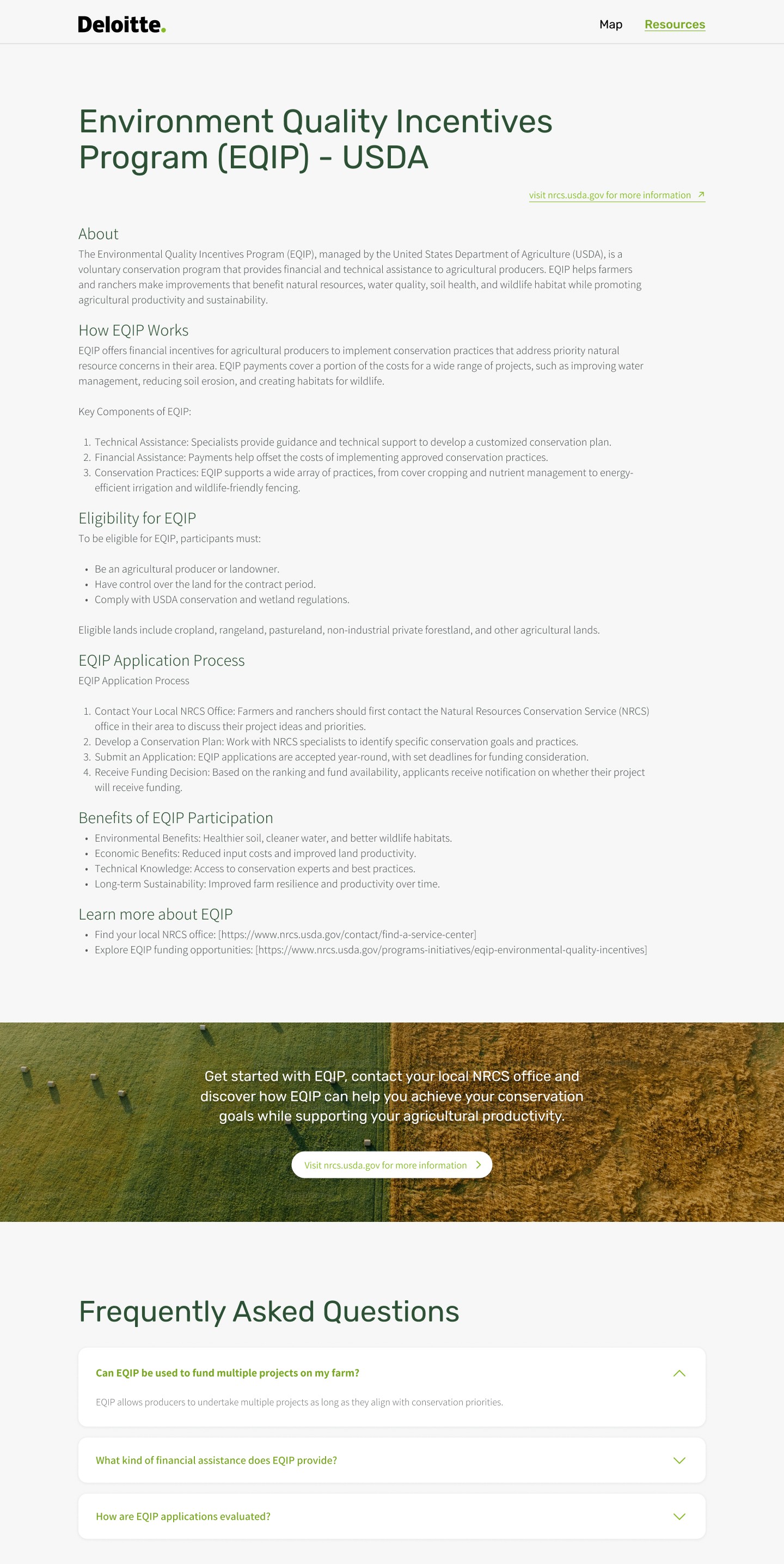
Website experience
The website introduces users to the future of smart rural communities through a mix of concise copy, iconography, and data points. Each section explains smart-ag concepts in plain language, then links to map views and resources so visitors can move from awareness → exploration → action in a single journey.
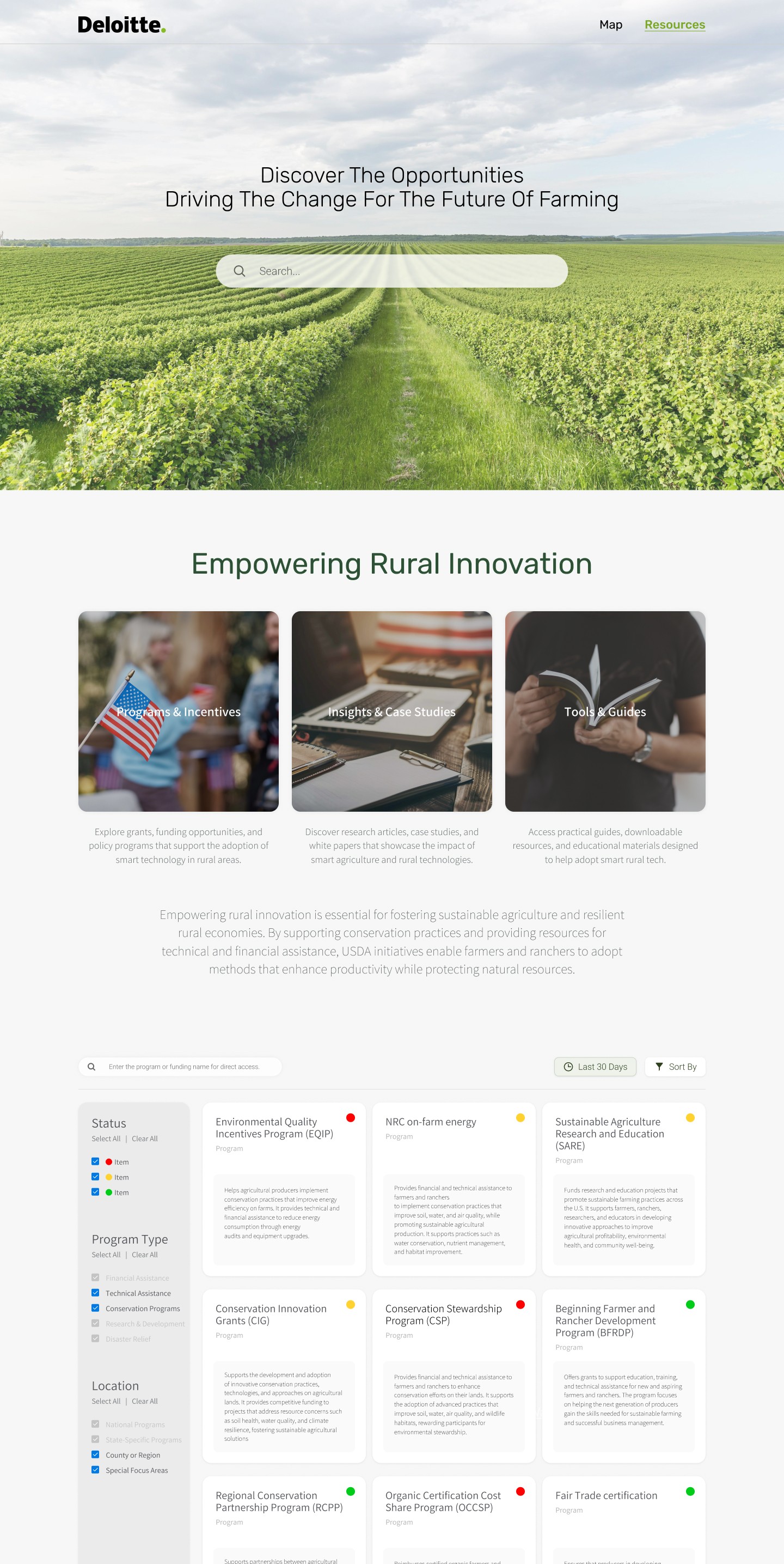
*Some information regarding the project is restricted due to NDA*
Why it matters :
Impact
While this project is still an early-stage concept, the platform is designed to scale across rural regions and support smarter decision-making for multiple audiences.
Empowering farmers
A centralized place to see region-specific technologies, sustainability initiatives, and funding opportunities, at a time when precision agriculture is projected to grow significantly over the next decade.
Strengthening communities
Rural innovations often stay siloed. By visualizing success stories and deployments on a shared map, the platform supports peer-to-peer learning and shows communities what’s possible in places like theirs.
Supporting local governments
For agencies and regional planners, the map acts as a decision-support layer — highlighting where initiatives are concentrated, which areas are still underserved, and where public–private partnerships could have the most impact for the 46M people living in rural areas.
Reflection
This project reinforced how UX strategy and systems thinking can turn abstract policy goals into something tangible for real people. Working within an NDA and a complex stakeholder landscape pushed me to stay outcome-focused: instead of designing “a cool map,” I had to constantly ask, will this actually help a farmer or planner make a better decision?